
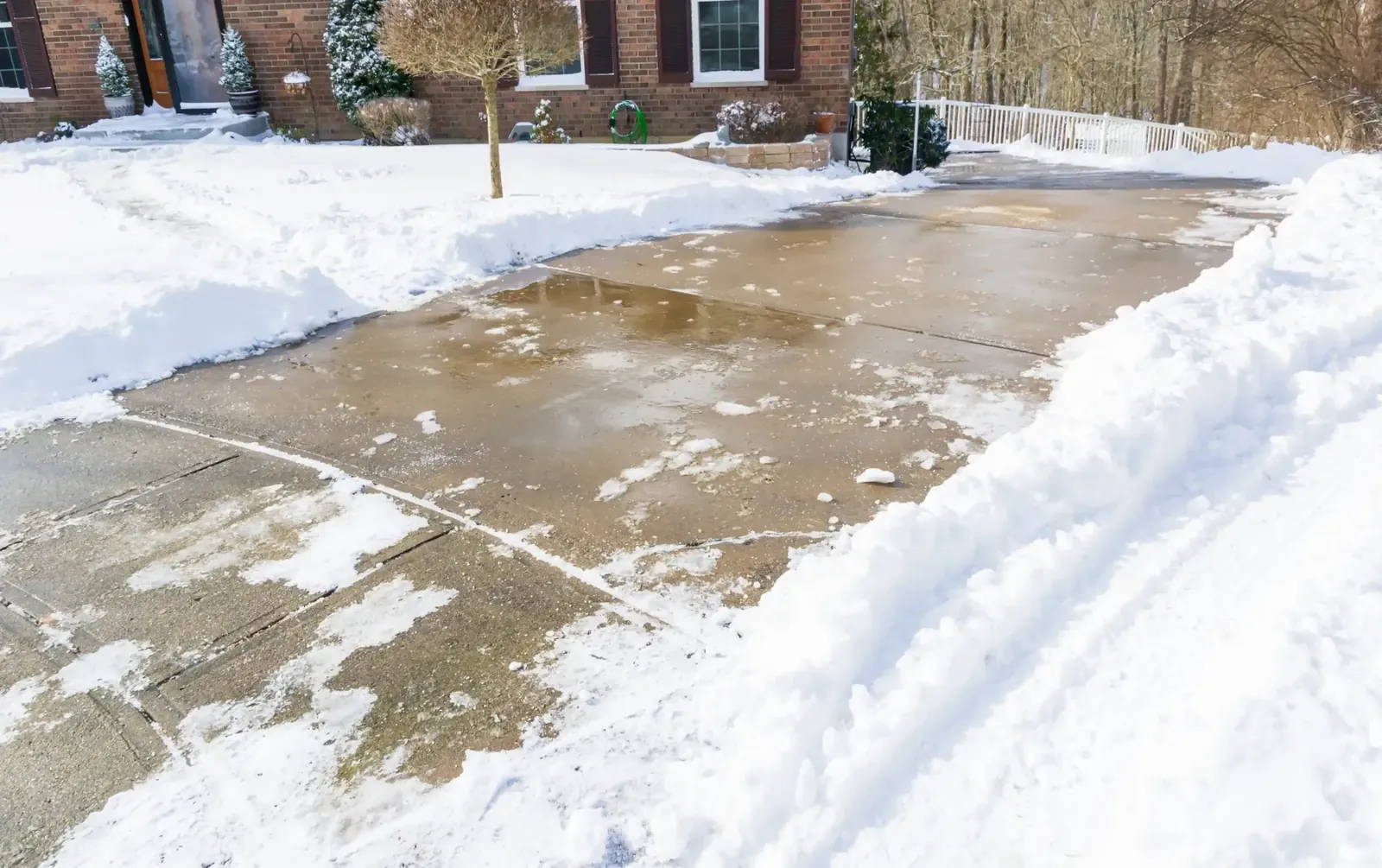
Every winter, Omaha concrete goes through the same rough routine. Snow melts during the day, the water soaks into cracks and pores, and it freezes again at night. Water expands about 9% when it turns to ice, so every freeze pushes cracks a little wider. Add road salt and our clay soil, which swells and shrinks with moisture, and it’s easy to see why so many driveways and sidewalks look worse in April than they did in October.
The good news is that fall is the best time to get ahead of it. Here are five things worth doing before the first freeze, which in Omaha usually arrives sometime in October.
1. Fill and Seal Cracks While It’s Still Warm
Any crack wider than a hairline is an open door for water. Once water gets in and freezes, a small crack can turn into a broken slab by spring. Cleaning out cracks and filling them with a flexible concrete crack sealant keeps water out all winter.
Crack sealants need dry weather and mild temperatures to bond and cure, so this is a job for September and October, not December. If a crack is wider than about a quarter inch, keeps getting longer, or has one side sitting higher than the other, have it looked at. That can mean the slab has lost support underneath. Our concrete repair and driveway repair pages explain what those fixes involve.
2. Seal the Surface Before Temperatures Drop
A good concrete sealer helps keep water and de-icing salt from soaking into your driveway. That soaking is what causes the flaking and pitting called scaling. Most sealers need temperatures of at least 50°F while they go on and for about a day afterward, so check the label and plan for a dry stretch of mild weather.
A few rules of thumb:
- New concrete needs about 28 days to cure before it’s sealed.
- Driveways that see a lot of salt usually need resealing every two to three years.
- Sealer won’t fix a crack or a sunken slab. Repair those first, then seal.
Already seeing flaking or pitting? Resurfacing can give the slab a smooth new top layer before it’s sealed. Learn more about concrete sealing and resurfacing.
3. Fix Trip Hazards and Sunken Slabs Before Snow Hides Them
A sidewalk panel that sits an inch lower than the next one is easy to spot in September. Under a layer of snow, it’s easy to catch a boot on it. Sunken slabs also collect water, which freezes into ice patches right where people walk.
Concrete leveling lifts a sunken slab back to an even grade without tearing it out, and it’s done on ground that isn’t frozen, so fall is the time to schedule it. If a tree root or frost has pushed a panel up instead, a single panel can often be leveled or replaced on its own. Here’s more on sidewalk repair.
4. Send Water Away From Your Slabs and Foundation
A lot of winter concrete damage starts with water in the wrong place. Before the snow flies, walk around your house and check:
- Downspouts. Extend them so water lands at least 4 feet from the house and doesn’t run across your driveway or walkways.
- Gutters. Clear out fall leaves so melting snow drains properly instead of spilling over the edge.
- Grading. Soil should slope away from the foundation, not toward it.
- Gaps along slab edges. Open gaps let water wash out the soil under a slab, which is how slabs start to sink.
Take a quick look at your basement walls, too. Damp spots, white chalky deposits, or water on the floor near a crack mean water is getting through. Because foundation crack repair is done from inside the basement, it can happen any time of year, but it’s best handled before spring snowmelt.
5. Choose a Concrete-Friendly De-Icer
Rock salt melts ice, but it’s also one of the main causes of scaling on unsealed concrete. A few simple swaps help:
- Calcium magnesium acetate (CMA) is one of the gentlest options for concrete. Calcium chloride is a common middle ground.
- Never use fertilizer-type de-icers that contain ammonium nitrate or ammonium sulfate. They attack concrete.
- Skip de-icers entirely on concrete poured within the last year, and use sand for traction instead.
- Shovel early. The less snow gets packed down, the less de-icer you need.
Your Fall Concrete Checklist
- Fill cracks wider than a hairline
- Seal driveways and patios while it’s still above 50°F
- Level sunken slabs and fix trip hazards
- Extend downspouts and clean out gutters
- Check basement walls for damp cracks
- Stock up on a concrete-safe de-icer
Not sure which of these your concrete needs? Call (402) 866-8535 or send us a message describing what you’re seeing. We’ll connect you with a vetted local pro for a free estimate before the weather turns.