
Driveway Repair in Omaha, NE
Your driveway takes more punishment than almost any other slab on the property. Here’s what usually goes wrong and how it gets fixed.
What Driveway Damage Usually Looks Like
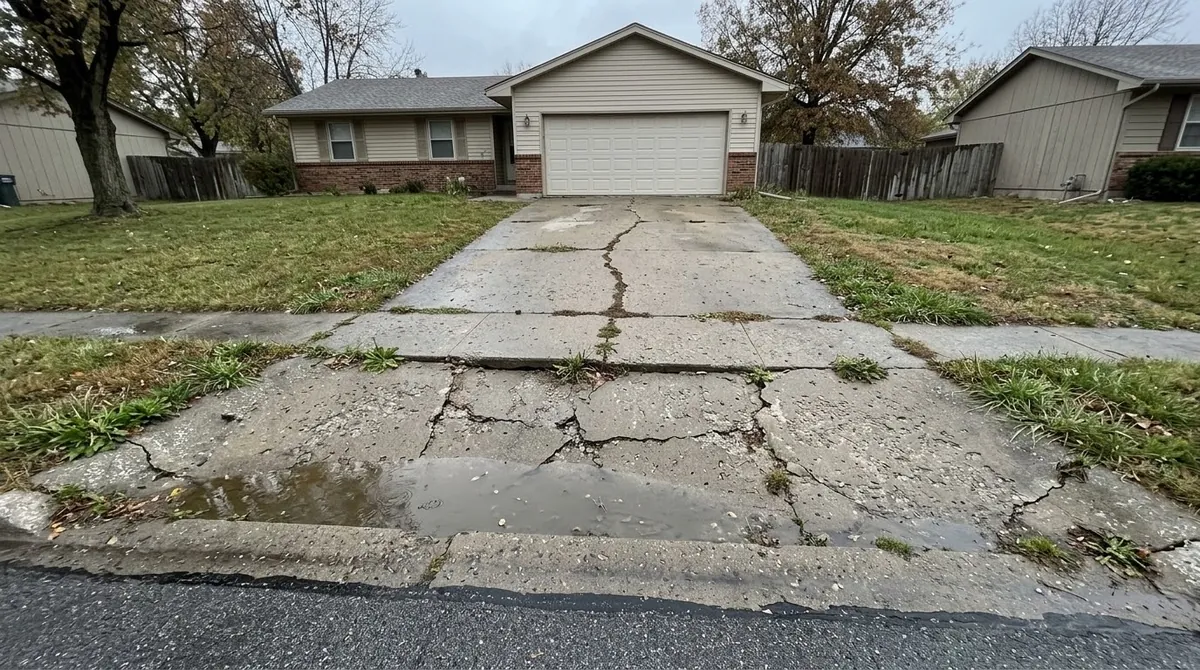
Driveways deal with vehicle weight, temperature swings, and de-icing salt all at once. So it’s no surprise they’re often the first thing to show damage. We see the same issues again and again: long cracks running from the garage toward the street, a sunken section near the garage apron, a flaking surface from winter salt, and joints that have opened up and let in weeds or water.
Matching the Fix to the Damage
A single crack usually just needs to be routed out and sealed. A sunken section can often be leveled back into place. Surface scaling can sometimes be resurfaced instead of replaced, if the damage hasn’t gone too deep. Sometimes a driveway has problems in several spots at once. In that case, tearing out and repouring the section is usually the more honest answer. It costs more up front, but patching around several weak spots rarely holds up for long.
Keeping a Repaired Driveway in Good Shape
Sealing matters more on a driveway than almost anywhere else on your property. It sits out in the salt and tire traffic all winter long. Calcium chloride de-icers are generally easier on concrete than rock salt. And keeping joints clear of debris helps water drain instead of pooling and refreezing.
Fixing Only What’s Broken
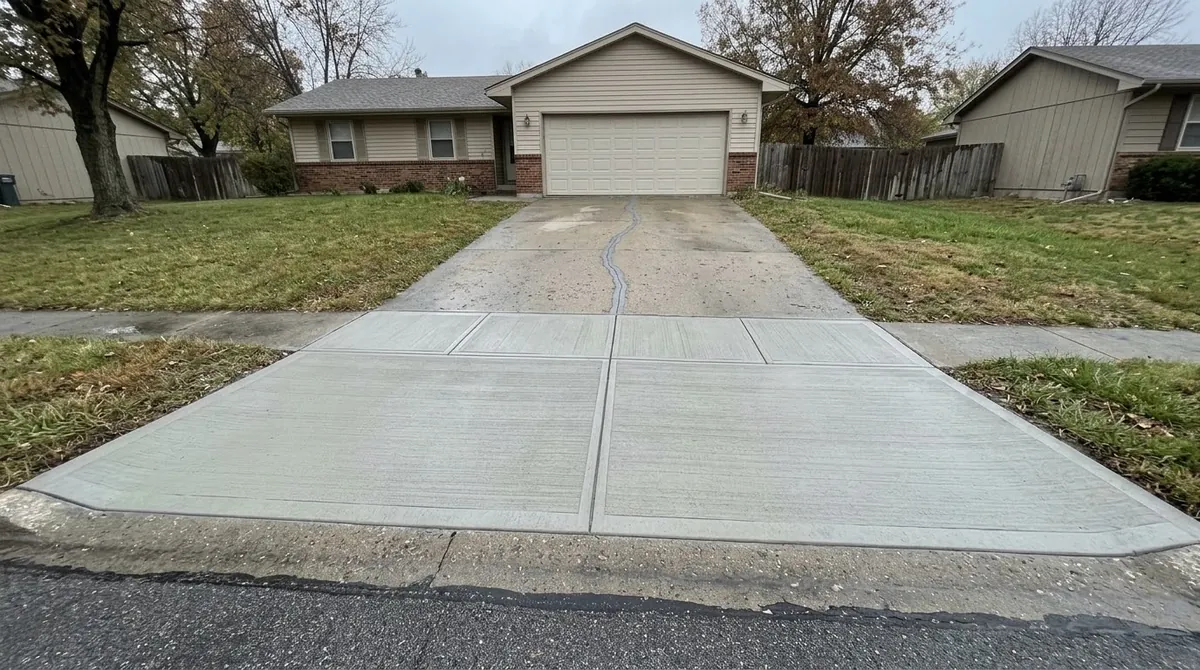
Most driveways don’t need a full tear-out. In this example, the sunken, salt-damaged apron by the street is replaced and the long crack is sealed. The rest of the driveway stays right where it is.
Drag the handle to compare before and after.
Why This Happens in the Omaha Area
Winter is the main driver of driveway damage in the Omaha area. Rock salt and other de-icers help with traction but can accelerate surface scaling on concrete that isn’t sealed. Combine that with a driveway apron near the street, which is often the first part to settle since it sits over a utility trench or compacted fill rather than undisturbed soil, and it’s easy to see why driveways need attention more often than other slabs on the property.
Driveway Repair Questions
Can I use my driveway right after a repair?
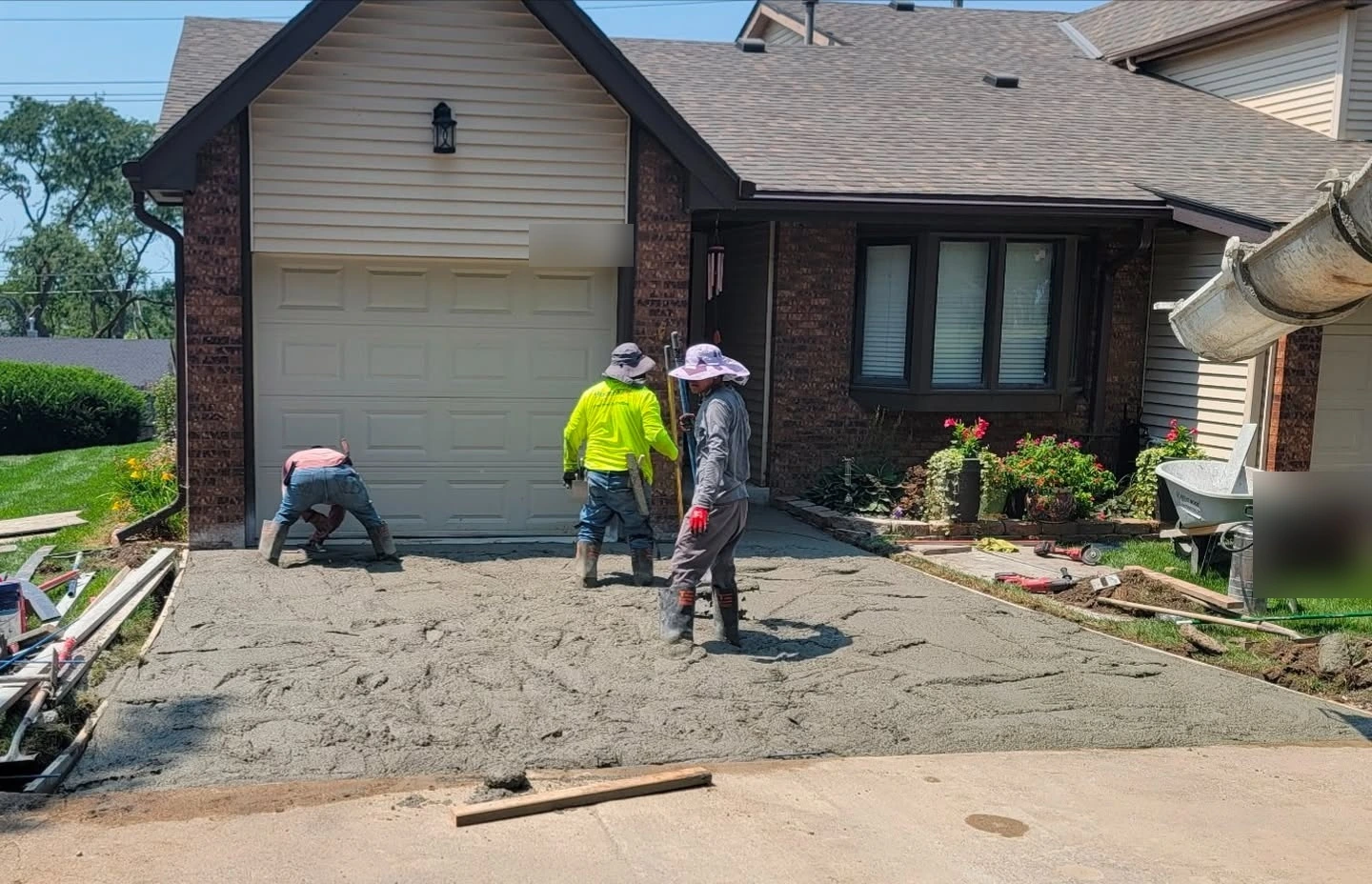
It depends on the repair. Crack sealing sets up fairly quickly, but a section that’s been repoured needs time to cure, often close to a week, before it can handle regular vehicle traffic. We’ll give you a specific timeline for your project.
How much does a small crack repair involve versus full replacement?
A crack repair is usually a single visit with minimal disruption. A full section replacement means removing the old concrete, prepping the base, and pouring new concrete, which takes longer and costs more.
Does rock salt actually damage concrete driveways?
Yes, especially on concrete that hasn’t been sealed. Rock salt can contribute to surface scaling and flaking over time. Calcium chloride or calcium magnesium acetate products are generally gentler on concrete.
Should I repair or replace a driveway with multiple cracks?
If the cracks are scattered across a large portion of the driveway, or if several sections have settled, replacement is usually the more durable fix compared to patching each spot individually.
Other Services That Might Help
Serving Omaha, Bellevue, Papillion, La Vista, Elkhorn, Gretna and the rest of the Omaha metro. See the full service area list →