
Foundation Crack Repair in Omaha, NE
Not every foundation crack is an emergency, but every one is worth a second look. Here’s how we tell the difference.
Hairline vs. Active Cracks
Plenty of foundation cracks are just cosmetic. A thin hairline crack that isn’t growing, and doesn’t let water through, is usually normal shrinkage from when the concrete first cured. We pay closer attention to a different kind of crack: one wider than a hairline, one that’s still growing, one that runs at an angle instead of straight up and down, or one that lets water into the basement after a heavy rain.
How We Evaluate and Repair
We look at the width, the direction, and the history of the crack. Has it been getting worse? For a crack that’s stable but letting in water, injecting it with epoxy or polyurethane is a common fix. It seals the crack from the inside without digging up the outside of the home. For a crack that suggests real structural movement, honest advice matters more than a quick patch. Sometimes that means recommending a structural engineer take a look before any concrete work happens.
Keeping Water Away Is Half the Battle
A lot of foundation crack problems come back to water. Downspouts that dump right next to the foundation are a common cause. So is grading that slopes toward the house instead of away from it, and gutters that stay clogged. All of these put extra pressure on your foundation walls. Fixing the crack without fixing the drainage around it is only half the job.
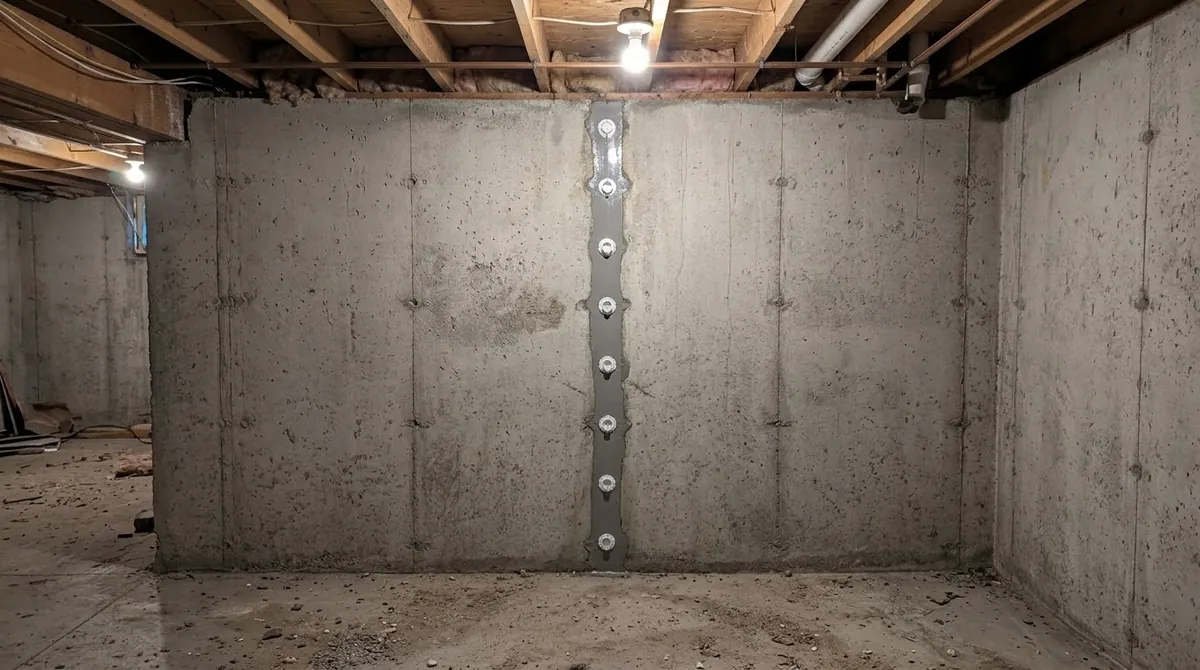
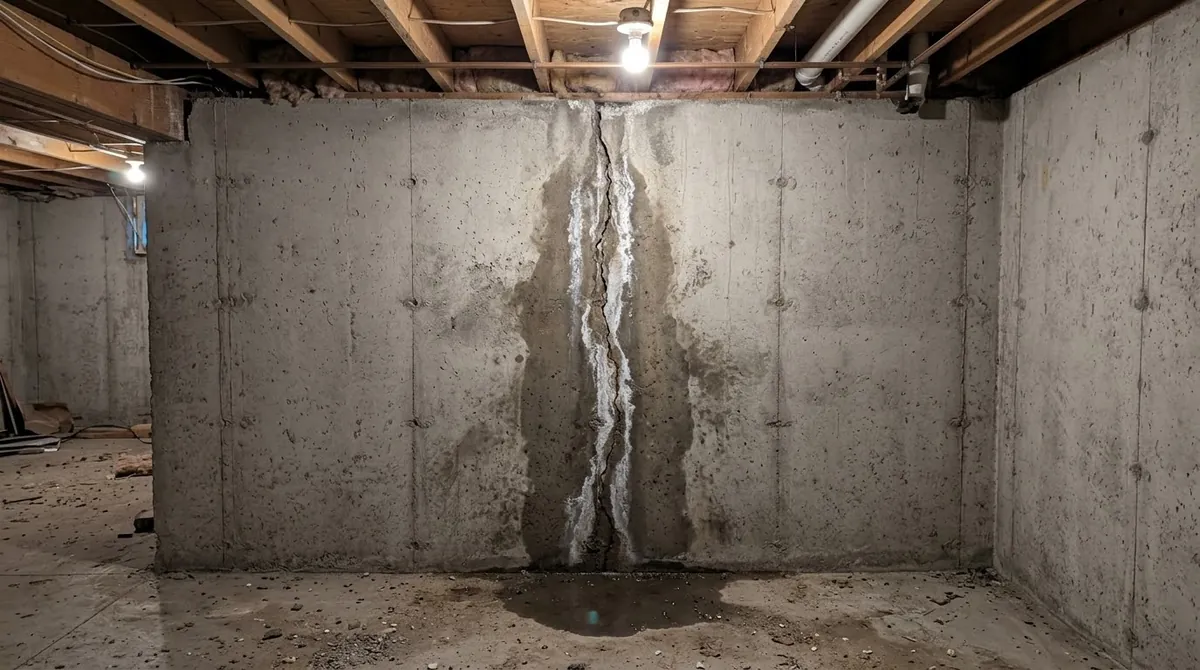
Sealing a Leaking Wall Crack from Inside
Water pushing through a wall crack leaves damp streaks, white mineral deposits, and puddles on the floor. Injection fills the crack from inside the basement so water can’t get through, with no digging outside the house.
Drag the handle to compare before and after.
Why This Happens in the Omaha Area
Eastern Nebraska’s clay-heavy soil is one of the most common reasons for foundation cracking in the Omaha area. Clay expands when it soaks up water and shrinks as it dries out, and that constant push and pull against a foundation wall, especially after a wet spring followed by a dry summer, is enough to open up a crack even in a well-built home.
Foundation Crack Repair Questions
Is every foundation crack a serious problem?
No. Many are hairline shrinkage cracks that aren’t structural. The ones worth watching closely are wider cracks, cracks that are growing, or cracks that let water in.
Can a foundation crack be repaired without excavating?
Often, yes. Non-structural cracks that are letting in water can usually be sealed from the inside with an epoxy or polyurethane injection, without digging up the outside of the foundation.
What causes foundation cracks in Omaha-area homes?
Expansive clay soil is the biggest factor. It swells when wet and shrinks when dry, which puts ongoing pressure on foundation walls, especially after seasons with big swings in rainfall.
When should I get a structural engineer instead of a concrete contractor?
If a crack is wide, growing quickly, running at a diagonal, or paired with other signs like a sticking door or an uneven floor, it’s worth getting a structural engineer’s opinion before any repair work.
Other Services That Might Help
Serving Omaha, Bellevue, Papillion, La Vista, Elkhorn, Gretna and the rest of the Omaha metro. See the full service area list →