
Concrete Sealing & Resurfacing in Omaha, NE
A structurally sound slab with a worn, pitted, or dusty surface doesn’t need to be torn out. Here’s what sealing and resurfacing can do instead.
Sealing vs. Resurfacing
These two get confused with each other, but they solve different problems. Sealing puts a thin protective coat over concrete that’s still in decent shape. Its main job is to block water, salt, and sun damage from wearing the surface down further. Resurfacing goes a step beyond that. It adds a thin new layer of cement-based material over the old slab. That fixes a worn, pitted, or discolored surface without pouring a whole new driveway or patio.
When Each One Makes Sense
Does your driveway or patio look fine but hasn’t been sealed in a few years? Sealing alone is usually enough to protect it going forward. Is the surface itself worn, flaking, or pitted from years of salt exposure? Resurfacing can restore a smooth, even surface. Neither one fixes a structural crack or a settled spot on its own. Fix those first, or the sealer or overlay just hides the problem instead of solving it.
Caulking Expansion and Control Joints
The gaps between driveway sections, and the joint where a driveway or patio meets the house, are where most water gets under a slab. Once it’s under there, it washes soil out, which leads to settling, and it freezes, which pushes slabs up. Concrete caulking closes those gaps. The old, failed material comes out, a foam backer rod goes into deeper joints so the sealant sits at the right depth, and a flexible polyurethane or self-leveling sealant goes on top. It stretches as the slabs move with the seasons instead of cracking loose.
Joint caulking is one of the cheapest ways to keep a slab from needing leveling later. It’s worth checking the joints any time you seal, and recaulking wherever the old material has pulled away, cracked, or sprouted weeds.
How Often to Reseal
As a general rule, a high-traffic driveway with regular winter salt exposure needs resealing every two to three years. Patios and walkways with less exposure can often go longer between coats. We can look at your specific surface and tell you where it stands.
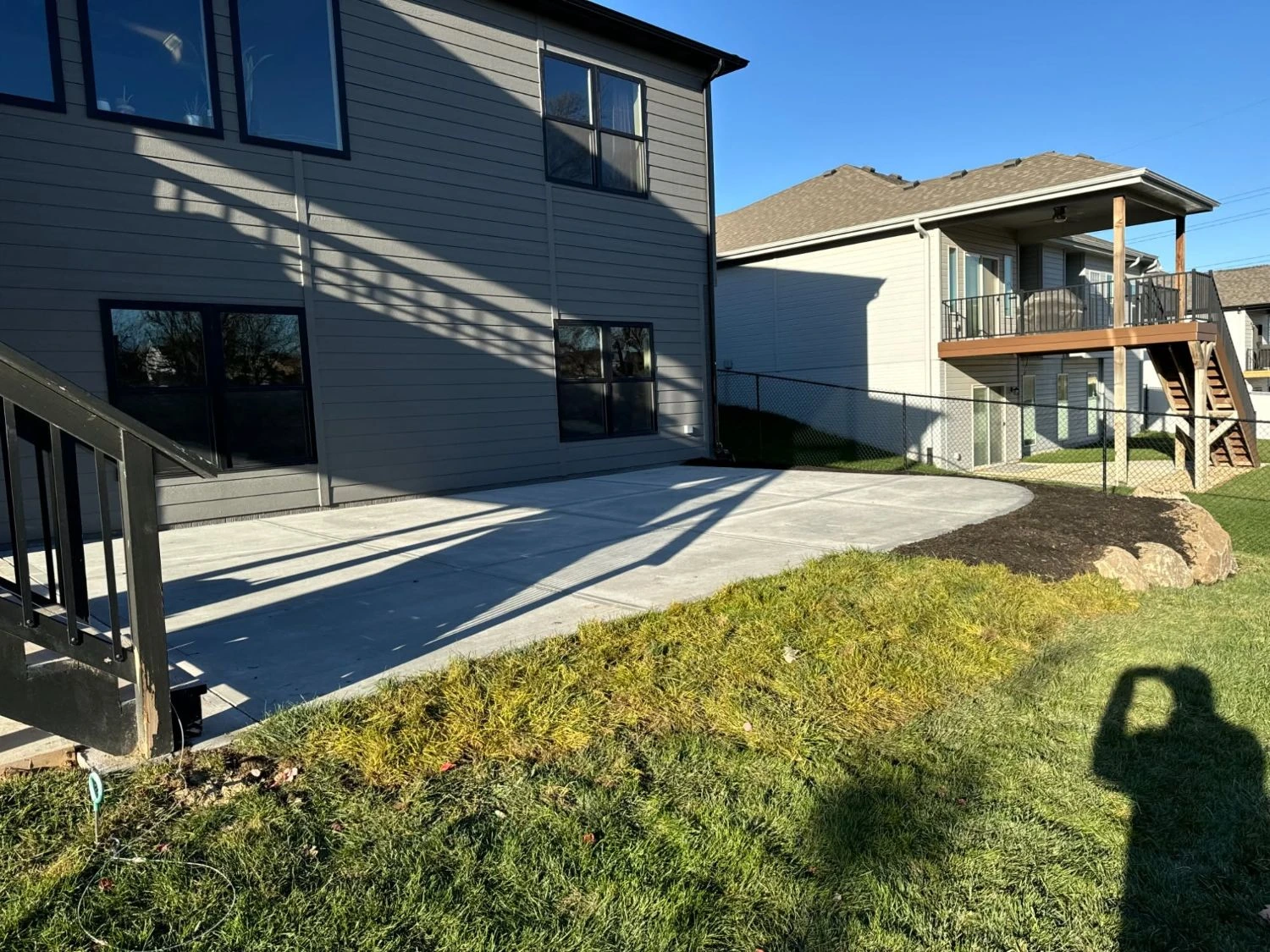
Renewing a Worn Surface
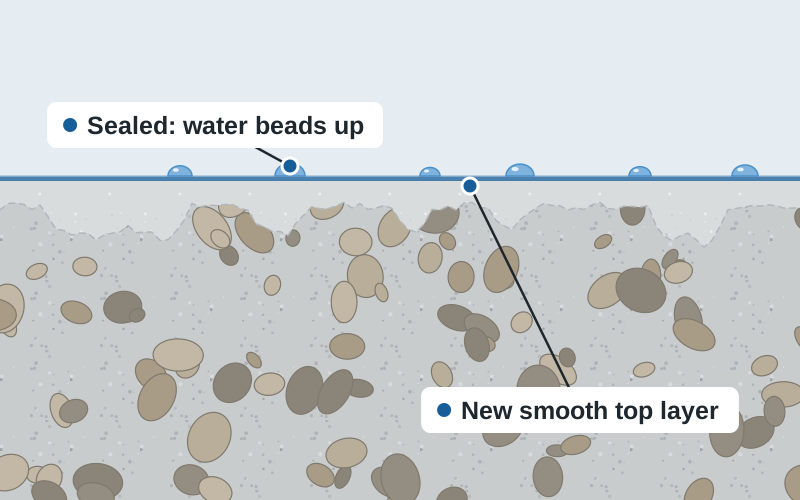
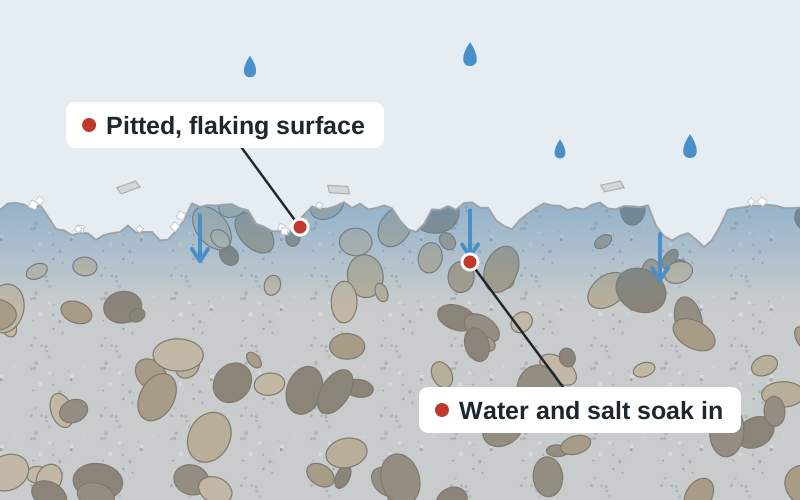
Salt and freeze-thaw wear away the top of a slab until it’s pitted, flaking, and soaking up water. A thin resurfacing layer gives it a smooth new top, and a coat of sealer makes water bead up instead of soaking in.
Drag the handle to compare before and after.
 Illustration
Why This Happens in the Omaha Area
Omaha’s salt-heavy winters are exactly why sealing matters so much here. Salt is effective at melting ice, but it’s also one of the main reasons concrete surfaces scale and flake over time. A good sealer creates a barrier between the salt and the concrete surface, which is a big part of why sealed driveways tend to hold up noticeably better through the years than unsealed ones.
Concrete Sealing & Resurfacing Questions
What’s the difference between sealing and resurfacing?
Sealing is a thin protective coating over concrete that’s already in good shape. Resurfacing applies a new thin layer of material over the top to fix a worn or damaged surface.
How long does a concrete sealer last outdoors in Nebraska winters?
It varies by product and traffic, but a driveway that sees regular salt exposure typically needs resealing every two to three years to stay protected.
Can resurfacing fix a cracked driveway?
Resurfacing addresses surface wear, not structural cracks. Any cracks or settling need to be repaired first, or they’ll usually show back through the new surface.
Do I need to reseal every year?
Usually not. Most driveways and patios in this climate do fine on a two-to-three-year resealing schedule rather than annually.
Should the joints in my driveway be caulked?
Usually, yes. Caulking the expansion and control joints, plus the joint along the house, keeps water from getting under the slab, where it causes settling and frost heave. Flexible sealant typically lasts several years before it needs to be redone.
Other Services That Might Help
Serving Omaha, Bellevue, Papillion, La Vista, Elkhorn, Gretna and the rest of the Omaha metro. See the full service area list →