
Concrete Leveling & Mudjacking in Omaha, NE
A slab that’s sunk an inch or two isn’t just annoying to look at. It’s a trip hazard. Here’s how leveling brings it back to grade.
It’s Almost Always About What’s Underneath
Concrete itself doesn’t usually compress or shrink. When a slab sinks, it’s because the ground underneath it has lost volume. That can happen when soil erodes away from water runoff, when the ground wasn’t compacted well before the original pour, or when Omaha’s clay soil dries out and shrinks after a wet season. Whatever the cause, the slab is left without full support, and gravity does the rest.
How Leveling Works
Leveling raises the existing slab back to a safe, even grade instead of tearing it out. Contractors generally use one of two approaches: pumping a cement-based slurry underneath the slab to fill the void and lift it (often called mudjacking or slabjacking), or injecting an expanding polyurethane foam that lifts the slab as it cures. Each has its place depending on the size of the slab, the void underneath, and access to the area. We look at your specific situation before recommending one.
Mudjacking vs. Polyurethane Foam Lifting
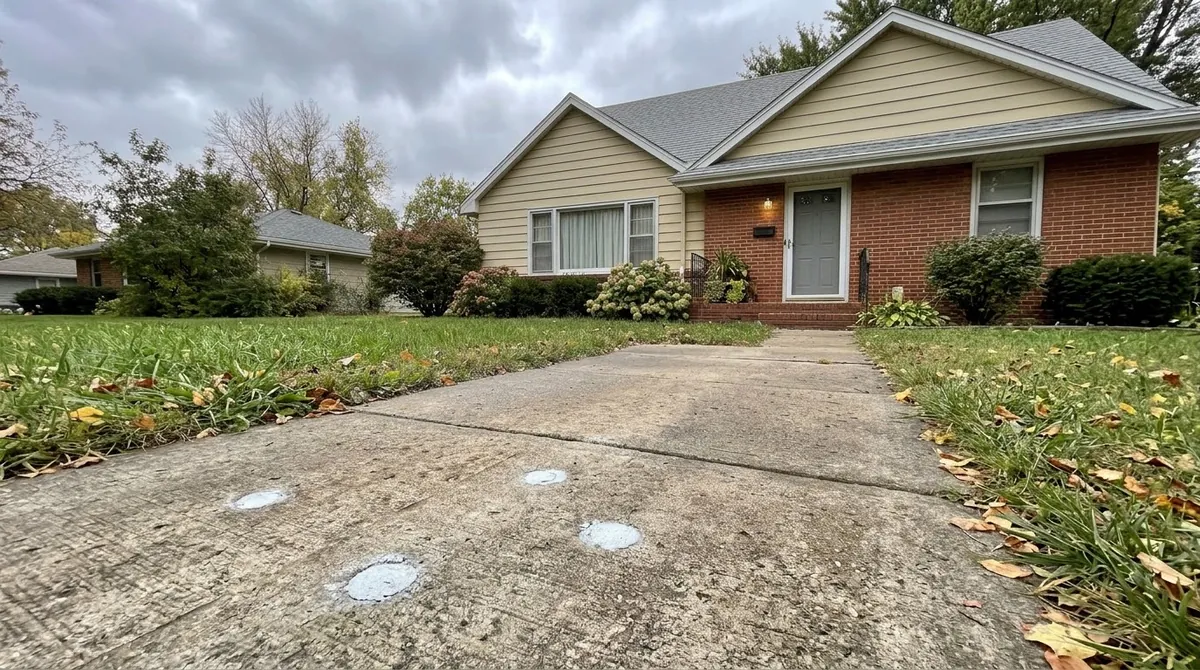
Mudjacking is the older of the two methods, and it’s still a good one. The slurry is heavy and fills large voids well, which makes it a solid choice under big driveway sections and garage aprons where a lot of soil has washed out. It needs holes about the size of a quarter or a bit larger, and the slab usually needs a day or so before it takes vehicle traffic.
Foam lifting uses smaller holes, weighs far less, and cures quickly, so a walkway or patio is often usable the same day. The lighter weight also means it adds less load to soft soil that may have caused the settling in the first place. It usually costs more per job. Neither one is right for every slab, and a good pro will tell you which fits yours instead of defaulting to the only rig they own.
When Leveling Isn’t Enough
Leveling works when the slab itself is still structurally sound. A slab that’s badly cracked, broken into pieces, or crumbling at the edges usually needs to be replaced instead, since lifting a broken slab just moves the broken pieces around. We’ll let you know up front if that’s what we’re looking at.
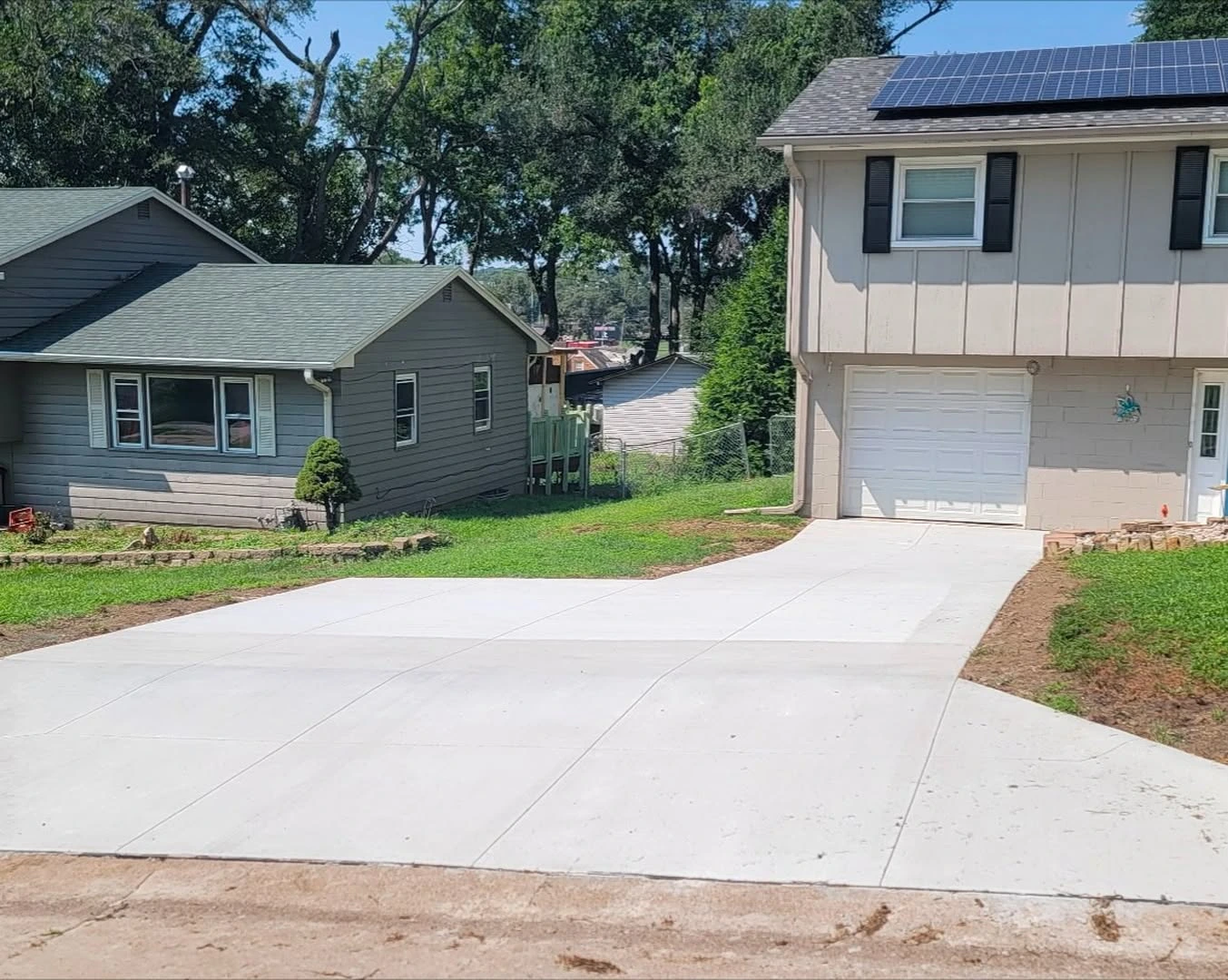
From Sunken Slab to Level Again
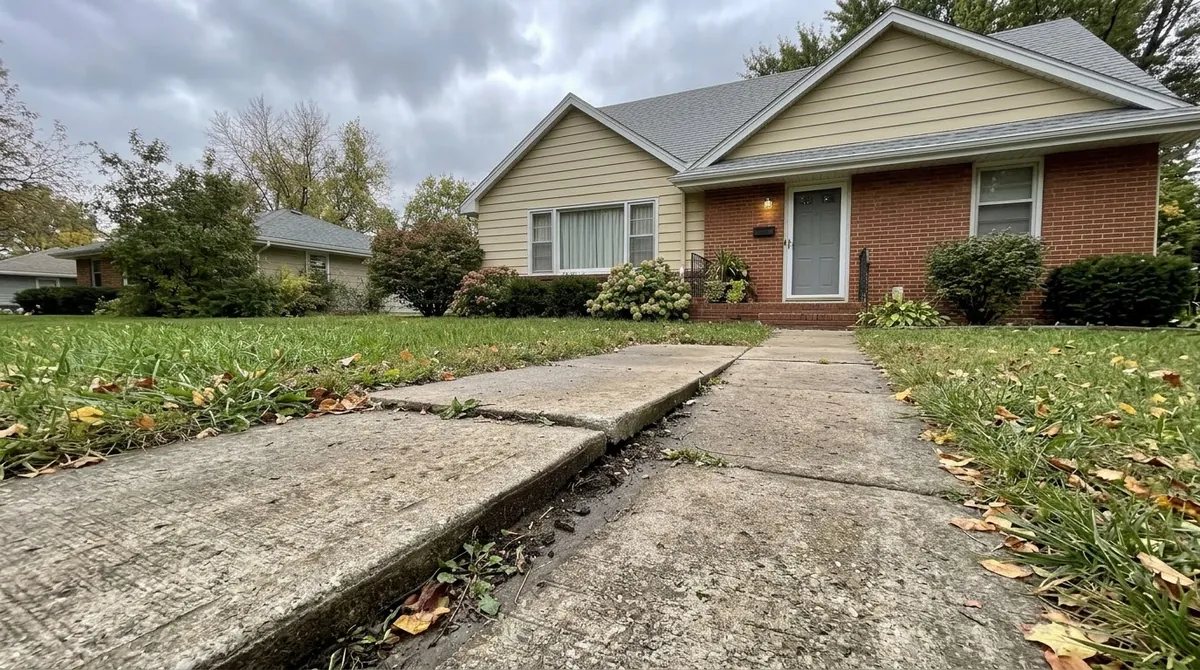
When water washes soil out from under a slab, the slab drops into the gap and leaves a lip at the joint. Leveling fills that empty space from below and lifts the slab back up to meet the concrete next to it, with no tear-out.
Drag the handle to compare before and after.
Why This Happens in the Omaha Area
Heavy spring rain is a big factor here. Omaha gets sharp downpours that can wash soil out from under a slab through gaps around the edges, especially on driveways and sidewalks with a slope toward the street. Older concrete in South Omaha and North Omaha, poured before modern compaction standards, is also more prone to settling than newer pours in West Omaha subdivisions.
Concrete Leveling Questions
How is sunken concrete lifted back into place?
A contractor drills small holes into the slab and pumps material underneath it, either a cement slurry or an expanding foam, to fill the gap and raise the slab back to grade.
Is leveling cheaper than replacement?
Generally, yes, since you’re not tearing out and repouring the whole slab. The exact cost depends on the size of the area and how much lift is needed.
Will leveled concrete sink again?
It can, if the underlying drainage problem that caused it isn’t addressed. That’s why we look at where water is going around the slab, not just the slab itself.
How do I know if my slab can be leveled or needs replacing?
It comes down to the condition of the concrete itself. If it’s cracked into multiple pieces or crumbling, leveling won’t hold. If it’s a solid slab that’s simply lower than it should be, it’s usually a good candidate.
Is mudjacking the same as slabjacking or concrete lifting?
Yes. Mudjacking, slabjacking, and concrete lifting all describe raising a sunken slab by pumping material underneath it. Foam leveling (sometimes called polyjacking) is the same idea using expanding polyurethane instead of a cement slurry.
Other Services That Might Help
Serving Omaha, Bellevue, Papillion, La Vista, Elkhorn, Gretna and the rest of the Omaha metro. See the full service area list →