
Concrete Repair in Omaha, NE
A crack across a step or a chipped patio edge rarely fixes itself. Here’s what concrete repair actually involves and when it’s the right call.
When a Crack Turns Into a Project
It usually starts small. A hairline crack across a patio. A chip at the edge of a step. Most people notice it, figure it’s not a big deal, and check back on it again next spring. By then the crack has usually gotten longer, and water has had a full winter to work its way in and make things worse.
Concrete repair covers a range of fixes short of a full replacement: filling and sealing cracks so water can’t get in and freeze, patching chipped or flaking spots (called spalling), caulking open or failed joints, and resetting or patching small sections that have broken away. The right method depends on how wide the crack is, whether it’s still moving, and what’s causing it in the first place.
Repair or Replace?
Repair makes sense when the slab itself is still sound and the damage is limited to a crack, a joint, or a small area. Replacement becomes the better option when cracking has spread across most of the slab, when multiple sections have settled, or when a repair would just be patching over a problem that’s going to come right back. We’ll tell you honestly which situation you’re in instead of selling you a patch job that won’t hold.
After the Repair
A repaired crack still needs to be sealed and kept an eye on. Sealing keeps water and de-icing salt out of the repair itself, and it’s worth redoing every couple of years on driveways and walkways that see a lot of winter traffic.
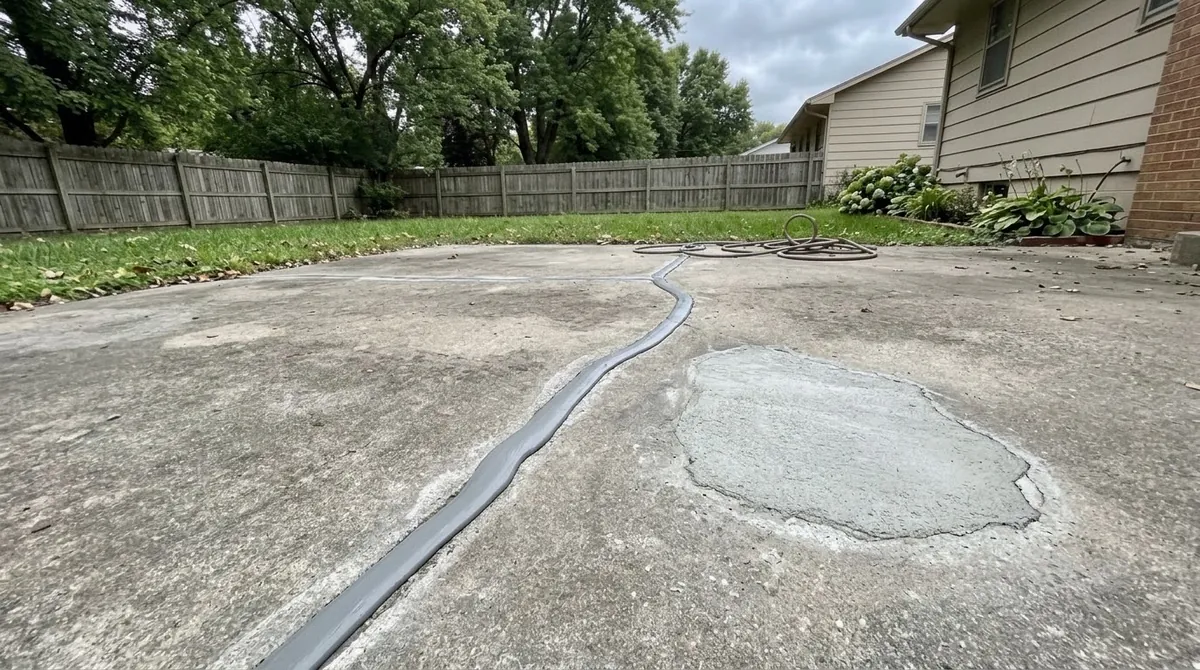
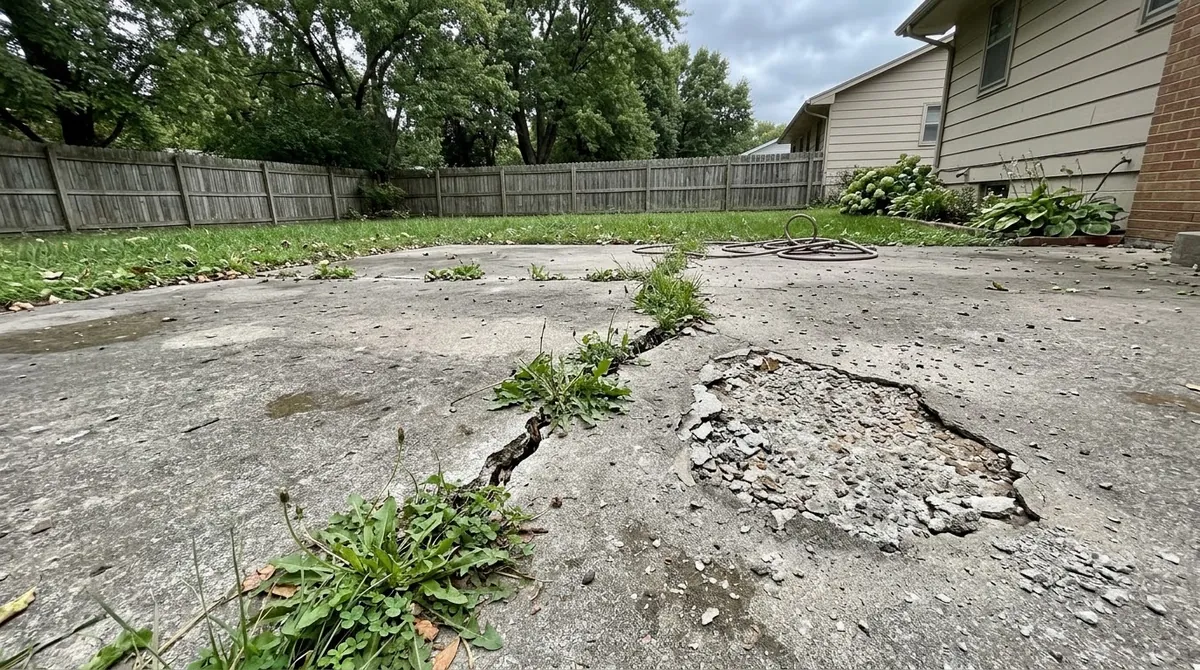
Closing a Crack Before It Spreads
An open crack lets in water and weeds, and every hard freeze pushes it a little wider. Repair cleans the crack out and seals it, and patches chipped spots, so there’s nowhere left for water to get in.
Drag the handle to compare before and after.
Why This Happens in the Omaha Area
Omaha sits on clay-heavy soil that swells when it’s wet and shrinks when it’s dry, and our winters bring a freeze-thaw cycle that can flip several times in one week. Both put constant stress on concrete, which is why cracks show up so often on driveways, patios, and steps even on homes that are well built. Older concrete in neighborhoods like Dundee, Benson, and Field Club has had decades of this cycle to work on it, which is part of why repair calls are so common there.
Concrete Repair Questions
Can a cracked driveway be repaired instead of replaced?
Often, yes. If the crack is isolated and the slab around it is still stable, filling and sealing the crack (or patching a small section) is usually enough. Widespread cracking across the whole driveway is a different story.
What causes concrete cracks in Omaha?
The biggest causes are clay soil that expands and contracts with moisture, freeze-thaw cycles through the winter, and normal aging. Water that isn’t draining away from the slab makes all of these worse.
Is a hairline crack something to worry about?
Not urgently, but it’s worth sealing sooner rather than later. Water gets into even a small crack, and when it freezes, it expands and makes the crack bigger.
How soon should a crack be repaired?
There’s no hard deadline, but repairing it before winter is smart, since freeze-thaw cycles are what turn small cracks into big ones.
Other Services That Might Help
Serving Omaha, Bellevue, Papillion, La Vista, Elkhorn, Gretna and the rest of the Omaha metro. See the full service area list →